
Beef Biosecurity

Although activism and activist activity certainly pose a reputational concern, biosecurity is one of the key drivers behind the importance of implementing farm security measures.

Two states are working to ramp up measures to minimize growing wild pig populations that are causing major damage to agriculture, the environment and private property.

Federal agents seized and destroyed more than 1,900 pounds of prohibited pork, poultry and ruminant products from New York City-area retailers in the past three months.

Colorado Parks and Wildlife officers confiscated feral swine from a farm in El Paso County that later tested positive for pseudorabies.

Federal agents foiled plans for 47 roosters and hens that tried to cross the U.S. border at the Laredo Port of Entry on Nov. 12.

The number of dogs being imported into the U.S. for resale from countries affected by ASF is growing. Combine that with an increasing risk of foreign animal disease spread, and it’s a formula for potential disaster.

It wasn’t the kind of cake U.S. Customs and Border Protection agriculture specialists were expecting to find while examining leftover baggage at Washington Dulles International Airport last month.

The Pirbright Institute is tackling three deadly livestock viruses: porcine reproductive and respiratory syndrome virus and African swine fever virus in pigs and bovine respiratory syncytial virus in cattle.
Each year, several thousand dogs enter the U.S. for resale or adoption. In a recent Hogs on the Hill article, NPPC chief veterinarian Liz Wagstrom wrote that it’s time to sound the alarm on importing rescue dogs.

FADs are a constant threat to the livestock industry. The country is more tuned in to this struggle than ever before with the recent COVID-19 pandemic. National Pork Board’s Dave Pyburn and NCBA’s Ethan Lane discuss why.

If the COVID-19 pandemic has taught the country anything, it’s that there is a tremendous amount of synergy between the circumstances of a pandemic involving humans and those involving animals.

Wild pig populations in Canada continue to expand rapidly and are completely out of control in Saskatchewan, Manitoba and Alberta. A new tool may help control this invasive species. Here’s why you should take note.

Invasive species councils in Montana and Washington are serious about preventing Canadian feral pigs from crossing into the western United States.

From increasing practical livestock biosecurity measures to advancing rapid depopulation and disposal abilities during animal disease outbreaks, Farm Bill funding will support endeavors to protect animal health.

The U.S. Food and Drug Administration has proposed a new regulation that would establish a list of foods that would require additional recordkeeping and traceability.
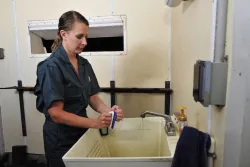
Putting biosecurity protocols in place can help reduce the risk of disease being transferred to not only livestock, but to humans as well.