
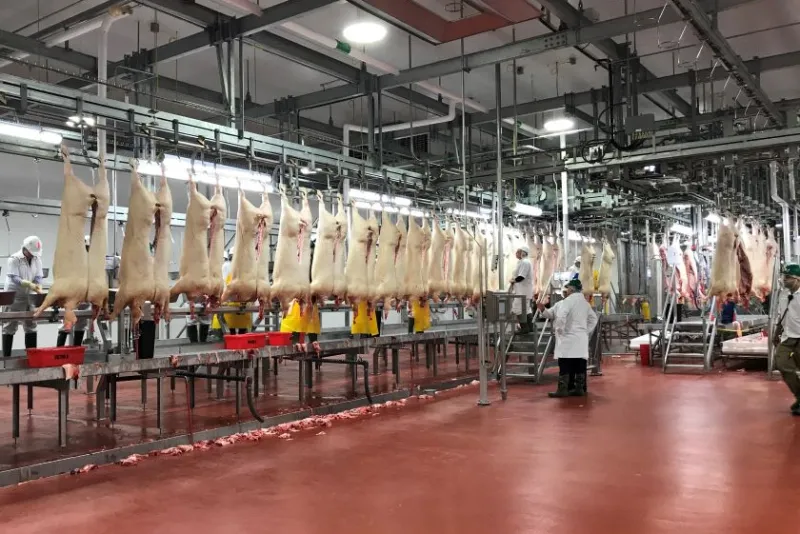
In a move that should alleviate some of the tight pork packing capacity and supply chain issues, the USDA will again allow some plants to run faster harvesting line speeds.
Up until March 2021, five plants had been operating faster line speeds for years under USDA’s HACCP-based Inspection Models Project (HIMP) and, beginning in 2019, under the agency’s New Swine Inspection System (NSIS).
That’s when a U.S. District Court in Minnesota struck down the line speed provision of the NSIS regulation, arguing that USDA did not consider worker safety in promulgating a final rule.
The decision came despite the fact that the NSIS was more than 20 years in the making, with the Clinton administration’s 1997 HIMP program serving as the precursor. That pilot program allowed faster harvesting line speeds and enabled USDA’s Food Safety and Inspection Service (FSIS) to better focus its resources on ensuring safe products were entering the food supply. It gave packing plants greater responsibility for carcass sorting, with FSIS inspectors verifying the effectiveness of the activities as well as concentrating on other food-safety tasks. (In addition to being used at five pork plants, the program was in place at 20 broiler processing facilities and five turkey plants.)
The court action also came just as the new Biden administration began grappling with supply chain problems, including a lack of meatpacking capacity, that were caused or exacerbated by the COVID-19 pandemic.
When the District Court’s ruling took effect on July 1, the pork industry lost 2.5% of its harvest capacity, Iowa State University economist Dermot Hayes estimated, with the five plants plus a sixth one that started running faster line speeds after the NSIS was implemented forced to reduce the number of hogs they harvested per hour. That had a detrimental effect on pork producers throughout the country.
It diminished competition because affected plants processed fewer hogs, leaving more pigs to be harvested by other packers, according to pork industry economist Steve Meyer. He pointed out that the contracts some producers had with packers likely were altered or canceled because of the loss of packing capacity. With more hogs chasing less shackle space (capacity), the prices producers received for their animals fell. Additionally, some producers undoubtedly incurred additional costs to transport hogs longer distances to plants that did have available capacity.
Now, under USDA’s one-year test program, nine plants – the six and three others – that had adopted the NSIS are eligible to implement faster harvesting line speeds. They also will need to collect data on the effects of faster speeds on worker safety and share it with USDA and the U.S. Occupational Safety and Health Administration. The information, USDA indicated, could be used to write a new NSIS regulation, letting more pork packing plants operate faster line speeds.
The U.S. pork industry supports the new program and is encouraging USDA to get it up and running so packing capacity can return to the level it had been for nearly the past quarter-century.
More from Farm Journal’s PORK:
NPPC Praises USDA’s Decision to Allow Faster Line Speeds
Faster Line Speeds at NSIS Pork Plants: Huge Deal for Producers
Pork Line Speed Ruling: Processors Seek Motion to Intervene
Line Speed Issue Raises Ruckus at House Ag Committee Hearing


