

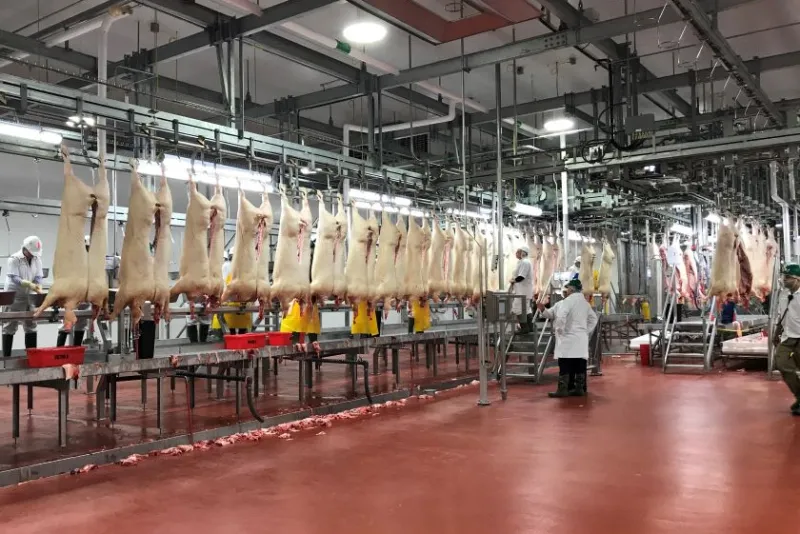
To preserve industry competition, the National Pork Producers Council (NPPC) is calling for a longer stay of the court order or waivers that allow the six plants impacted by a federal district court ruling to continue operating as is until a long-term solution acceptable to all industry stakeholders can be established.
The ruling, set to go into effect on June 29, will undermine what is currently a healthy level of industry competition, NPPC said in a release. The ruling striking down pork harvest facility line speeds under the USDA’s New Swine Inspection System (NSIS) will result in a 2.5% loss in pork packing plant capacity nationwide, and more than $80 million in reduced income for small U.S. hog farmers this year, according to an analysis by Iowa State University Economist Dr. Dermot Hayes.
Competition in the U.S. pork industry has spurred innovation, job growth and industry expansion, while establishing the United States as a global leader in pork production, NPPC said.
In a paper overviewing the current competitive dynamics of the U.S. pork industry by economists Steve Meyer of Partners for Production Agriculture and Barry Goodwin of North Carolina State University, the authors explain that the district court ruling reduces competition because the impacted plants will process fewer hogs, leaving more pigs available to other packers. found here,
“Some of these hogs were purchased through negotiated trades, but others were procured through contract arrangements that may be altered or canceled in the face of lower capacity,” Meyer said about the impact of the court ruling on pork industry competition. “Producers whose contracts are affected will likely have to accept lower values for their animals. Prices received by all producers may be reduced due to decreased competition. Impacted producers may also incur additional freight costs to move hogs to distant plants with available capacity. The situation will get significantly worse in the fourth quarter when the hog supply reaches its seasonal high.”
The U.S. needs more pork harvest capacity, NPPC wrote in a release. Unfortunately, the court order will reduce plant capacity at six plants running at NSIS line speeds by as much as 25%. The five original NSIS plants have been safely operating for more than 20 years.
“Time is running out for the U.S. pork industry,” NPPC president Jen Sorenson said in a release. “We ask the administration to seek a longer stay or waivers to preserve U.S. pork industry competition – which is always good for workers and consumers – and prevent harm to small hog farmers while we work constructively with all stakeholders toward a longer-term solution.”
More from Farm Journal’s PORK:
Misguided Ruling Could Upend the Lives of Many Hog Farmers, Sorenson Says
Judge Denies Seaboard’s Motion to Delay Line Speed Limits
U.S. Pork Processor Seeks to Delay Court Decision Limiting Slaughter Speeds
Federal Court Removes Swine Slaughter Line Speed Provision
Union Representing Pork Processing Plant Workers Sues USDA
Industry Groups File Brief in Support of New Swine Inspection System


