
U.S. Department of Agriculture

Despite tightening inventories and a decade-low breeding herd, softening domestic and export demand is projected to pressure hog prices and squeeze producer margins into 2027.

The application deadline for the Feral Swine Eradication and Control Pilot Program has been extended to this Friday, Sept. 25.

What do surveillance test volumes mean for U.S. swine health? USDA’s Lynn Wachtman shares how national sample collection is critical to protect the domestic swine herd.

The USDA’s planned $156 million commodity purchase will redirect $27 million to domestic pork products, providing high-quality protein to federal nutrition assistance programs.

A New York farmer’s viral videos exposing pressure tactics by solar developers caught the attention of USDA’s new Special Envoy for American Landowners, John Rich, turning a local fight into a national one.

Funded through the Working Families Tax Cuts Act, the Feral Swine Eradication and Control Pilot Program is opening $35 million in new grants to help partners across 14 states protect American farms, livestock and natural resources.

The USDA strike team uses dispersal by air and vehicle along with ground release chambers to keep the devastating flesh‑eating pest from gaining a foothold in U.S. livestock and wildlife.

The second round of PRV testing is complete. Iowa Secretary of Agriculture Mike Naig confirms all farms have been released from quarantine.

Animal health officials respond to second detection of New World screwworm in a 1-month-old calf.

The new 52,000-square-foot facility in Kerrville, Texas, is dedicated to genomics and advanced pest control technologies to protect American livestock from invasive threats.

By moving key support functions to Iowa and Georgia, the agency seeks to better align its scientific and administrative resources with the rural communities they serve.

Ag Secretary Brooke Rollins says a multi-agency Trump administration effort will target fertilizer costs and boost U.S. production, with a major announcement expected yet this week.

South Africa’s government secures millions of additional doses from Turkey to contain the country’s worst outbreak in years.

Agriculture Secretary Brooke Rollins broke ground on a $750 million sterile fly facility in Texas and confirmed the border will remain closed until the New World screwworm threat is pushed back from the U.S. border.
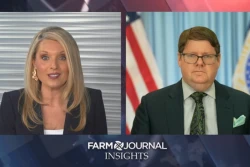
In a candid conversation with Farm Journal, USDA Deputy Secretary Stephen Vaden says USDA’s message to fertilizer companies is simple: “Be part of the solution, don’t be part of the problem.”

As the Iran war drives fertilizer prices up 40%, the Trump administration is warning against price gouging. A new survey shows only 60% of corn farmers have secured their nitrogen needs for 2026.

A new genetic innovation from the Agricultural Research Service aims to produce 100% sterile male flies, maximizing facility efficiency and safeguarding the U.S. livestock industry from NWS.

Following extensive industry feedback, the updated guide provides a science-based roadmap for states, ranchers and veterinarians to combat potential NWS outbreaks.

New voluntary labeling standards take effect as Secretary Rollins shares her support of mandatory labeling.

Why is a long-term farm bill even needed with the provisions included in the One Big Beautiful Bill? Industry leaders explain their views on the issue.

Persistent African swine fever outbreaks in Asia and Europe highlight continued viral pressure. USDA urges pork producers to remain vigilant in keeping this disease out and devotes the week of March 1-7 as ASF Action Week.

USDA takes action to lower food costs on consumers and strengthen the supply chain through proposed changes to line speed rules.

Texas issues a statewide disaster declaration and USDA makes strategic reallocation of sterile flies to safeguard the U.S. livestock industry and public health.

During his trip to Clive, Iowa, Trump reaffirms support for year-round E15, backing corn growers and ethanol, while announcing John Deere’s expansion of two new domestic production and distribution facilities.

Driving innovation to combat NWS and prevent its northward spread.

What if you only had to give your info to USDA once? NRCS Chief Bettencourt says that’s the goal, one file for FSA, NRCS and other agencies within USDA, so staff can get back to the basics of better serving farmers.

With the retirement of two of its key leaders, USDA APHIS announces the faces who will take on those positions.