

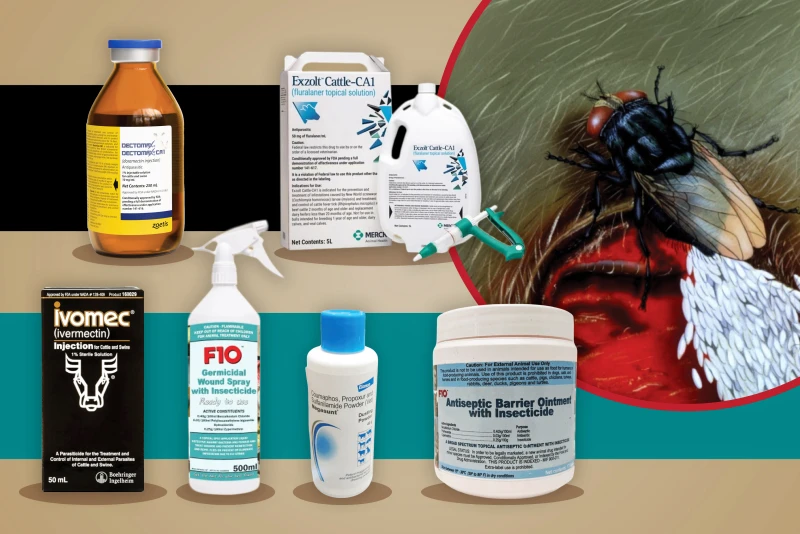
New World Screwworm or Cochliomyia hominivorax is still south of the U.S. border, but the prevention and treatment playbook is already taking shape. Veterinarians, regulators and ranchers who’ve seen this pest up close keep coming back to the same point: you can’t treat your way out of screwworm.
Prevention means fewer wounds, tighter calving windows, stronger parasite programs and more “eyeballs” on cattle, backed up by early reporting and a vet‑guided treatment plan.
When cases do occur, today’s toolbox — from prescription pour‑ons and emergency‑use injectables — can limit the damage, as long as producers know how and when to use each tool.
The Food and Drug Administration’s (FDA) Center for Veterinary Medicine (CVM) is working with animal drug sponsors to identify potential products and seeks to have them approved or otherwise authorized for the prevention or treatment of NWS myiasis. The agency has multiple regulatory pathways and access mechanisms to facilitate the availability of animal drugs for NWS.
Currently, FDA has conditionally approved two products for use with beef cattle. This list continues to grow as FDA approves products. For an up-to-date list you can visit the FDA website.

Animal Drugs Conditionally Approved by FDA for NWS
- Dectomax-CA1 (doramectin injection) injectable solution: Prevention and treatment of infestations caused by NWS larvae (myiasis), and prevention of reinfestation for 21 days in cattle.
- Exzolt Cattle-CA1 (fluralaner) topical solution: Prevention and treatment of infestations caused by NWS larvae (myiasis) and treatment and control of cattle fever tick (Rhipicephalus microplus) in beef cattle 2 months of age and older and replacement dairy heifers less than 20 months of age.

Emergency Use Authorization of Animal Drugs for NWS
On Aug. 18, 2025, the Department of Health and Human Services issued a declaration enabling FDA to issue Emergency Use Authorizations (EUAs) for animal drugs to treat or prevent infestations caused by NWS. This list continues to grow as FDA approves products and for an up-to-date list, you can visit the FDA website.
Here is the current list of products FDA has approved for emergency use:
- Ivomec (ivermectin) injectable solution: Prevention of infestations caused by NWS larvae (myiasis) when administered within 24 hours of birth, at the time of castration, or at the appearance of a wound in cattle, except for female dairy cattle producing milk for human consumption and calves that will be processed for veal.
- F10 Antiseptic Wound Spray with Insecticide (benzalkonium chloride, polyhexanide and cypermethrin topical solution): Prevention and treatment of infestations caused by NWS larvae (myiasis) in cattle, horses, minor species of hoof stock, raptors and other wild birds, pet birds, and captive wild, exotic and zoo mammals.
- F10 Antiseptic Barrier Ointment with Insecticide (benzalkonium chloride, polyhexanide and cypermethrin topical ointment): Prevention and treatment of infestations caused by NWS larvae (myiasis) in cattle, horses, minor species of hoof stock, raptors and other wild birds, pet birds, and captive wild, exotic, and zoo mammals.
- Negasunt Powder (coumaphos, propoxur, and sulfanilamide topical powder): Prevention and treatment of infestations caused by NWS larvae (myiasis) in cattle, swine, goats, sheep, horses, donkeys, domestic hybrid equids, and captive wild, exotic, and zoo mammals. Negasunt is currently limited to USDA-authorized users and government agencies to prevent misuse.
- Dectomax/Dectomax-CA1 (doramectin injection): Prevention and treatment of infestations caused by NWS larvae (myiasis) in dairy cattle (lactating dairy cows, dry dairy cows, replacement dairy heifers, 20 months of age and older) except for calves that will be processed for veal; and prevention of infestations caused by NWS larvae (myiasis) in horses 1 year and older, swine, sheep except lactating sheep and deer.
Prevention Options: Don’t Blanket Treat
When considering prevention, experts suggest the best option is to evaluate and adjust management practices compared to mass treating. They also encourage working with your veterinarian to make a plan.
“You may want to reevaluate with your veterinarian your integrated pest management as far as what you’re doing for ticks, and what you’re doing for the fly control and things where you might have more wounds, and that’s what you want to minimize if it does indeed get here,” suggests Dr. Diane Kitchen, a cattle rancher and Florida Department of Agriculture veterinarian manager, bovine and cervidae programs.
A veterinarian is central to the preparation and treatment plan. Part of being prepared is sitting down now with your veterinarian and discussing: “If we get screwworm, what’s our plan? How often are we looking at cattle, what products are we going to use, and what do we do about movements?”
For wound care, antibiotics, pain management and access to tools, a veterinary client–patient relationship is vital. Treatment is about parasite removal and wound management, guided by vets.
South Texas beef producer Jason Sawyer says, “We’ve also re‑evaluated our parasite control programs in the context of our beef quality assurance program and really tried to set for ourselves a comprehensive plan for how we can better monitor cattle, better treat and better prevent their exposure to screwworms, should the pest re‑emerge in Texas.”
Sawyer, who manages ranches near the U.S.-Mexico border, explains, “We’re trying to work with the weather instead of against it and think about comprehensive parasite control strategies that can minimize that risk for newborn calves, knowing that we’re unlikely to be able to put our hands on every one of them as they hit the ground.”
Health officials say mass or blanket treating the whole herd in an attempt to “prevent” NWS is not the answer. The goal should not be to habitually treat animals ‘just in case.’
“Blanket treatment of animals is not recommended,” stresses Dr. Julia Herman, National Cattlemen’s Beef Association (NCBA) beef cattle specialist veterinarian. “We need to be really responsible in how we use these products. Any unnecessary or inappropriate use should be avoided — this reduces the risk of developing antimicrobial resistance. Only use products for the parasites that are listed on the label.”
Sawyer agrees with the importance of resistance management, adding, “We don’t want to react to an emergent threat in a way that then creates problems with a persistent pest that’s already present.”
Kitchen summarizes that producers and veterinarians have many more tools than they did back in the ’60s and ’70s when NWS was last endemic in the U.S., but producers and veterinarians should strive to avoid “unnecessary or inappropriate use” to preserve effectiveness.
For NWS, the plan is not to line up every animal on the ranch and treat them all ‘just in case.’ Regulators and veterinarians aim to inspect, treat infested or high‑risk animals, and use systemic products where they make sense, always watching resistance, withdrawal times and product supplies.
Your Next Reads:


