

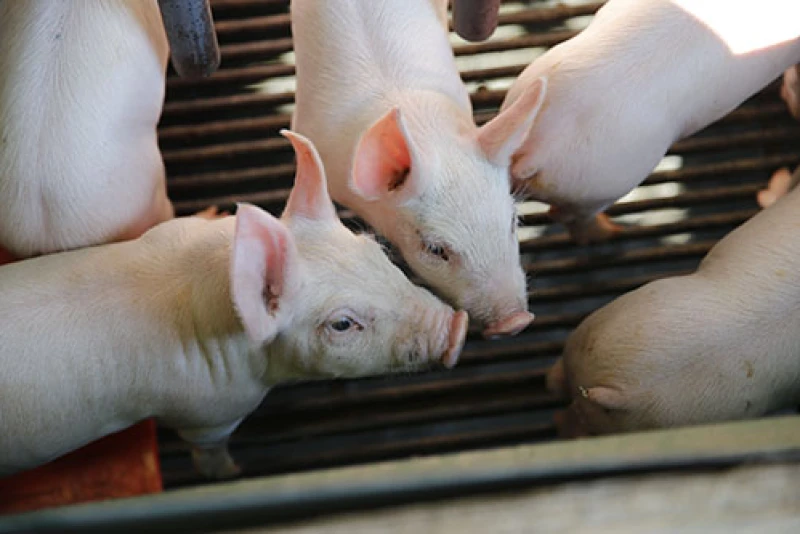
A much bigger contraction in the total hog inventory at 74.5 million head caught a lot of people off guard in the latest USDA Hogs and Pigs Report, said AgriTalk’s host Chip Flory.
“Usually being plus or minus one percentage point different than the average of analysts’ pre-report expectations, I would call a surprise,” Lee Schulz, chief economist at Ever.Ag told Flory. “Three percentage points has got to be a shocker, right?”
Schulz acknowledged that eight USDA estimates were below the lower bound range of pre-report expectations.
Before looking forward to see what implication this has for pipeline supplies, Schulz says people need to look back at what caused the contraction in the numbers.
“We need to understand where those tighter wean pig supplies are coming from,” he explains. “USDA told us we have a smaller breeding herd. They went back and revised the June 1 breeding herd lower by 30,000 head. Then they told us we had 1.8% fewer in the breeding herd this September compared to last September. That’s about 110,000 head.”
This, combined with even fewer sows farrowing than expected, because of a lower than average breeding herd utilization rate, has contributed to the contraction.
“Collectively, that made the pig crop much lower,” he says. “According to the report, expected slaughter supplies from mid-November through February are much tighter than anticipated.”
Abundance of Caution
Schulz says when looking at things cumulatively since 2020, pork producers just broke even this August.
“That speaks to how bad late-2022 through the early parts of 2024 were,” he says. “There is still some financial healing in the industry that’s going on. Going forward, you have high interest rates and high building costs. All those factors come into play when producers do longer-term planning and look at possible investments, and producers pushing the brakes a little bit has resulted in some tighter supplies.”
Another takeaway from the report is that productivity increases continue, Schulz points out. Last quarter’s litter rate had a 0.9% annual increase.
“When you have a farrowing rate as low as it was, it doesn’t matter how high those litter rates are, it can’t make up for that,” he says. “I think that was really the story here. Usually litter rates give us the bump. Certainly they helped, but they didn’t provide larger supplies year over year, like they have the last couple of quarters.”
Looking Forward
An AgriTalk listener reached out with a question: Are the summer 2026 lean hog futures undervalued?
“That is a great question,” Schulz says. “I think the most appropriate way for me to answer that is not to just look at prices, which certainly are near contract highs. But when you look at margins for that time, they are just off of the strong margins we saw this past summer.”
He says those are some of the stronger margins the industry has seen both short and even long term.
“From a risk management standpoint, I think there is value of allowing for some participation to the upside, but we are at the point of maximum financial risk because we are near those contract highs,” Schulz says. “The market has come to us. I think the opportunity is there to offset that risk. There are some strategies that may allow us to participate to the upside. There may be a little bit of legs to this market yet.”
Read more:
September 2025 Hogs and Pigs Report: Here’s What You Need to Know


