

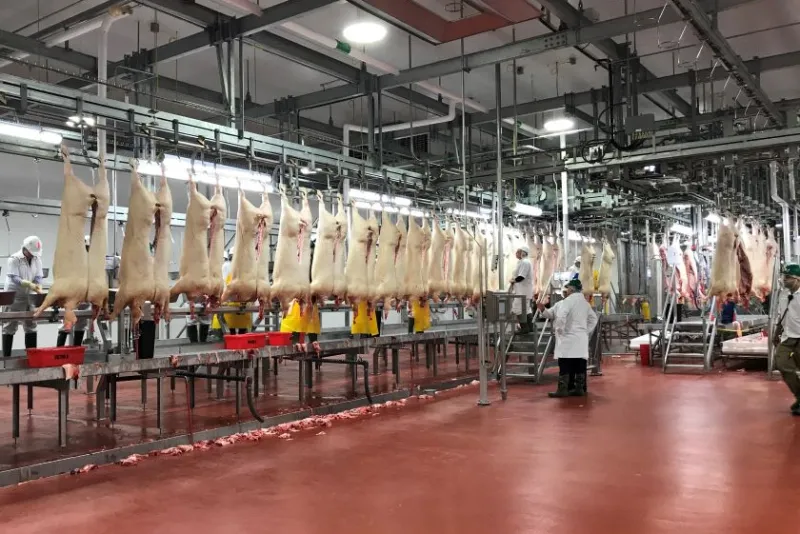
Pork processors were nixed in their bid to stay a lower court’s decision that killed part of a USDA rule that let plants operate without line-speed limits, reports Pro Farmer analyst Jim Wiesemeyer.
“In a one-line ruling, a circuit court just basically denied the appeal by four major hog processors,” Wiesemeyer said during the Friday Free for All on AgriTalk. “So where do we from here? Remember what Vilsack told AgriTalk about a month ago. Maybe there can be a negotiated settlement between the United Food and Commercial Workers International Union and the industry. That’s how labor unions solve it. Give them a higher labor rate, and they’ll work with you.”
Wiesemeyer said that is what he thinks could and should happen.
AgriTalk host Chip Flory added that USDA Secretary of Agriculture Vilsack indicated in that discussion that there may be some sort of payment coming that would help to offset some of the losses that smaller operators may experience from the line speed slowdown.
But Flory isn’t holding his breath. “We’re just going to lose capacity,” he said.
A Farmer’s Perspective
Earlier this year, a federal court in Minnesota vacated a provision of New Swine Inspection System (NSIS) that enabled pork processors to establish maximum line speeds. In late May, the Food Safety Inspection Service (FSIS) said plants that operate under the NSIS should prepare for a maximum line speed of 1,106 head per hour by the end of June.
“And it happened,” Flory said during the Farmer Forum on July 14 with Randy Francis, an Iowa pig farmer.
On June 30, the U.S. pork industry lost 2.5% of its packing capacity overnight when a federal court ruling to slow line speeds at six packing plants took effect. The ruling will result in $80 million in reduced income for small U.S. hog farmers this year alone, according to an analysis by Iowa State University Economist Dermot Hayes.
Francis admits that his farm in northeast Iowa has not been affected by the line speed changes yet.
“There’s probably going to be a few hogs pushed into Iowa to make up the differences in the other areas. We probably do have lighter inventories going to market right now from a production standpoint due to some health challenges we faced,” Francis said. “If you look at the changes happening on July 1, that’s probably better than it could have been had it been October 1 or November 1 when you’re seasonally seeing more pigs go to market at that time.”
Although it probably could have been more stressful, Francis said, he hopes where plants are affected that the industry can shuffle things around during the summer and figure out some creative ways to move pigs through the pipeline.
“The plants are doing some different things within their own plants to create the efficiency,” Francis said. “The plants know what they can do. It’s just a matter of now using the new rules that they have to deal with and doing a good job in the plant.”
Read more about the line speed ruling:
The Reality of Slower Line Speeds
Federal Court Removes Swine Slaughter Line Speed Provision
Slower Line Speeds in Effect at Six Pork Processing Plants
Pork Industry Seeks Waivers for Plants Impacted by Line Speed Ruling


