

This is a developing story that we are continuing to follow and will update when more information is available.
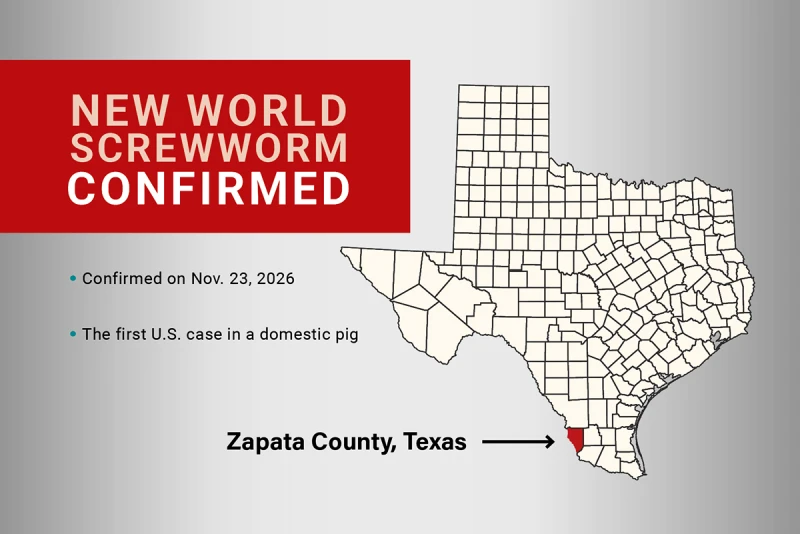
The first case of New World screwworm (NWS) in a domestic pig in the U.S. was confirmed on Nov. 23 in Zapata County, Texas. Zapata County is a border county in South Texas along the Rio Grande and is not a large commercial swine production area of Texas.
“The infestation was found in a castration wound, and the animal is being categorized as an exhibition or show animal,” says Dr. TR Lansford, Texas Assistant State Veterinarian and Texas Animal Health Commission (TAHC) Deputy Executive Director.
One of the ways that NWS is different than other animal health threats is that it is not an infectious disease, explains Dr. Dusty Oedekoven, chief veterinarian for the National Pork Board.
“The fly lays eggs in wounds of warm-blooded animals, and the larvae cause myiasis,” Oedekoven explains. “It isn’t transmitted directly from animal to animal. FDA has conditionally approved some products and authorized others for emergency use against NWS, so treatment options are available. The risk should be taken seriously, but there’s no need to panic.”
Rapid Response Underway in Zapata County
TAHC response personnel are currently conducting epidemiological investigations and initial response activities on site. NWS response activities around infested premises and infested zones include active and passive animal surveillance (notably animal inspections), supporting animal movement requirements by conducting animal movement inspections, and issuing Treatment/Movement Certificates. In addition, TAHC is working with USDA partners for fly surveillance and sterile fly releases and engaging in producer education, outreach and awareness activities, Lansford says.
Protect Your Herd: Treat Wounds and Apply Preventatives
“All animal owners, including swine producers, should work with their veterinarian to utilize preventatives appropriately, manage and care for wounds quickly and effectively to prevent infestations, monitor animals closely, and report suspicions immediately,” Lansford says. “NWS is not an infectious disease, it’s a highly preventable and treatable pest. Preventing wounds, treating and covering existing wounds, and using appropriate preventative therapies and practices are key ways to protect animals form infestations.”
The Feral Swine Factor
Across the state of Texas, producers deal with large feral swine populations, he points out. Response partners at USDA Wildlife Services and Texas Parks and Wildlife continue to monitor wildlife, including feral swine, for signs of NWS.
“All animal owners, outdoorsmen, hunters, producers and stakeholders should look at animals as often as possible for signs of infested wounds and report suspicions to TAHC, TPWD or their veterinarian immediately,” Lansford says.
Key Guidance for U.S. Producers
Oedekoven shares these important reminders for U.S. pork producers.
What signs should producers look for?
Being observant of potential signs is very important. Things to look for are head shaking, irritability, lethargy or animals that are off feed. Look for visible wounds that are not healing or are getting worse. You can see the larvae in wounds at some point. The other thing that’s distinctive about NWS infestation is that it has a very foul odor as the larvae eat into that tissue. I heard the state veterinarian in Texas say it best: “The best thing we can put on our animals right now is our eyeballs.”
What biosecurity tips do you recommend now?
As we think about biosecurity related to viral or bacterial infections, cleaning, disinfection and maintaining a sanitary environment remain important. This is especially true with NWS because you need to specifically target flies. Fly control ensures you are not creating environments favorable to fly habitation. Anything you can do to keep the flies down around your livestock is going to be an additive measure of biosecurity. The most important thing people can do right now is to be observant of their animals.
Read More:


