

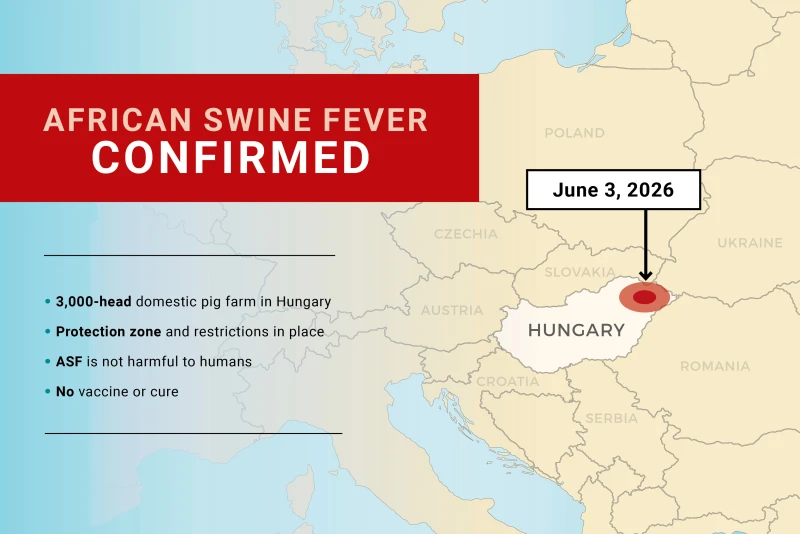
Hungary has confirmed its first case of African swine fever (ASF) virus in domestic pigs. This was confirmed by the National Food Chain Safety Authority (Nébih) on a 3,000-head domestic pig farm in Szabolcs-Szatmár-Bereg county on June 3.
The national chief veterinarian has ordered measures to prevent the further spread of the disease, including the closure of the farm and implementation of epidemiological measures. The pig herd on the affected farm is being culled, and an epidemiological investigation is underway to determine the origin of the infection and its possible further spread. The authority has designated a protection and surveillance zone around the outbreak and introduced restrictions, and is asking pig farmers to strictly comply with the disease control regulations, reports Nébih.
“Pay special attention to compliance with disease control regulations,” Nébih urges. “It is of utmost importance to keep farms closed and to restrict the entry of outsiders and vehicles. It is also essential to fully implement disinfection regulations, as well as to prevent domestic pigs from coming into contact with wild boars in any way, either directly or indirectly through infected feed or equipment.”
Livestock farmers are asked to notify their veterinarian if they notice sudden fever, death or bleeding symptoms in their pig herd.
African swine fever is a serious viral disease of domestic and wild pigs. It is not dangerous to humans, but there is no cure and no vaccine against it, so the presence of the disease can cause significant economic damage to the pig industry. Learn more here.
“High-level biosecurity is essential,” says Lisa Becton, associate director of the Swine Health Information Center.
Although this virus is currently not in the U.S., Becton advises that biosecurity steps for other diseases directly apply to ASF prevention such as prevent interaction with feral pigs, wear dedicated clothing and footwear at the farm, have downtime from international travel, and have a plan like Secure Pork Supply in place that also enhances biosecurity.


