

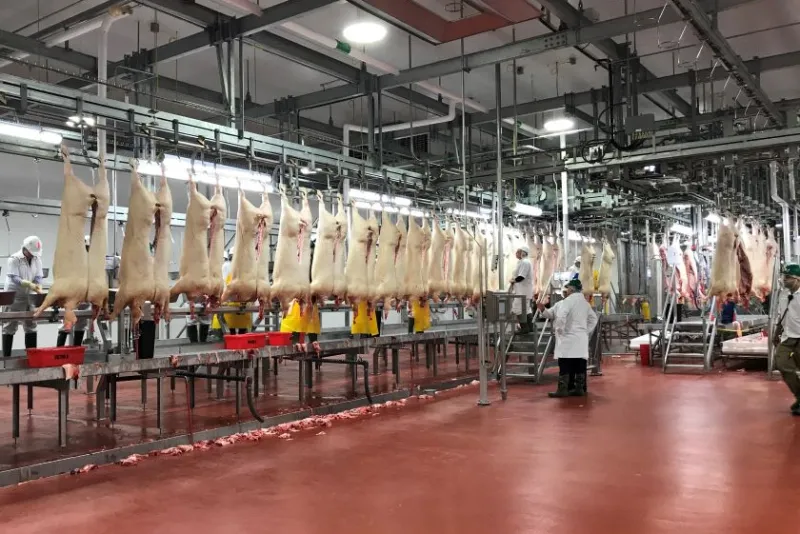
USDA’s self-imposed Nov. 30 deadline on the Time-Limited Trial for New Swine Inspection System plants is rapidly approaching. USDA’s inaction is failing the pork industry, the United States Senate Committee on Agriculture, Nutrition and Forestry wrote.
“USDA’s inaction amplifies the economic uncertainty facing hog farmers at a time when profitability for farrow-to-finish hog operations is already at its worst level in more than two decades,” the Committee shared.
USDA has yet to establish a permanent solution or issue an extension of the current Time-Limited Trial that currently allows six pork processing plants to operate at increased line speeds to facilitate greater efficiency and output while protecting and improving worker safety and food safety, the Committee wrote.
Nearly 40% of the U.S. supply of hogs are within 100 miles of these six processing plants in Illinois, Michigan, Minnesota, Nebraska and Pennsylvania.
“Absent a permanent solution or an extension of the current Time-Limited Trial, these processors will have to reduce their operational capacity, which reduces demand for hogs, disrupts the supply chain for U.S. hog farmers and processors and exacerbates already historically high inflation in the U.S. food supply,” the Committee said.
Estimates from Iowa State University indicate that the expiration of the Time-Limited Trial could reduce pork processing capacity by at least 2.5% nationwide – equivalent to nearly 260,000 hogs per month in reduced output.
For consumers, this means higher prices for retail pork as supplies available at grocery stores and in the food service sector are reduced, the Committee pointed out.
For farmers, the reduced plant processing capacity will lower the demand for market-ready hogs and result in lower prices received by family farmers, the Committee wrote.
“Conservative estimates suggest that the expiration of Time-Limited Trials could further erode hog farmer margins – which are already projected to be negative – by an additional $10 per head due to increased operating costs associated with reduced demand,” the blog said.
The Committee is calling on USDA to provide guidance and certainty to the industry risks making the farm economic conditions for hog farmers more dire now and well into the future.
“This situation is a classic example of how actions by regulators and the federal government have real consequences on the lives of everyday Americans,” the Committee wrote.


